every recipe in this kitchen written down (372 pages): https://berthascookbook.com
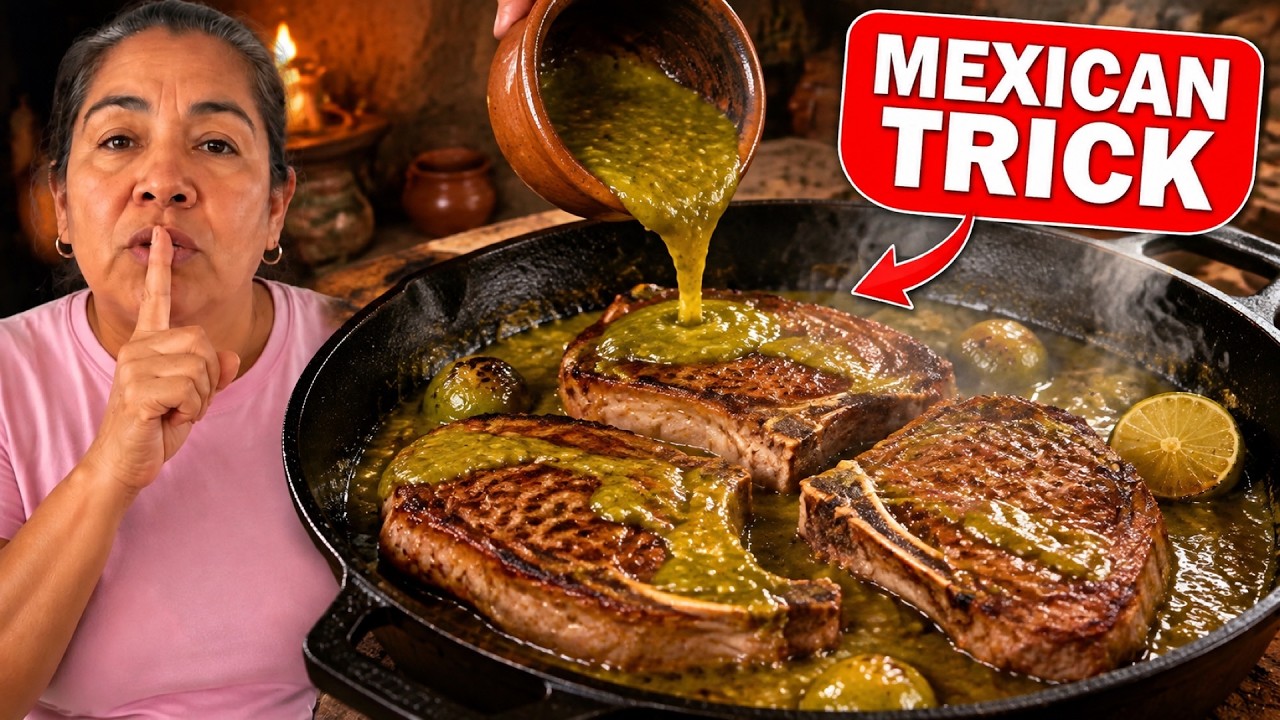
Cut into the pork chop you made last week, mija, and tell me what you saw. Gray all the way through, dry enough to need a glass of water with every bite, the edges curled like a dead leaf. And you did everything right. You bought the good chops, you got the pan hot, and you cooked them until they were DONE, because everybody knows pork has to be cooked all the way through. And you said what every woman in this country has said once: pork is just dry. Sit down, because that is not what pork IS. That is what pork has been DONE TO. Today, the trick my mother did to every chuleta before it touched the pan, which takes thirty minutes of doing nothing, and the official lie about pork that was corrected years ago while nobody came to your kitchen to tell you.
THE TWO ENEMIES OF A PORK CHOP (you were fighting the wrong one)
1. THE PORK CHANGED. Your grandmother's pig had fat running through the meat, and fat forgives you. Starting in the 1980s they bred that fat out to sell pork as a lean meat. The chop you buy today has almost nothing inside to protect it. You did not get worse at cooking. The pork stopped forgiving you.
2. THE NUMBER IN YOUR HEAD. You were taught pork must be white all the way through, from a real fear about a parasite that has been essentially gone from commercial pork for decades. In 2011 the USDA lowered the safe temperature for whole cuts of pork to 145°F with a rest. That is a chop with a blush of pink in the center, and it is safe and juicy. Nobody sent a letter to your kitchen. You are still cooking to 160 and 170, and at that temperature every drop has been squeezed out onto the plate.
THE TRICK, two versions (my mother used both)
• THE BRINE (for juice): 4 cups cold water + 2 Tbsp salt, optional 1 Tbsp sugar, a smashed garlic clove and a bay leaf. Stir to dissolve, chops in, 30 MINUTES MINIMUM, 2 HOURS MAXIMUM, in the refrigerator.
→ Why: salt water moves INTO the meat and changes its proteins so they HOLD that water when the heat comes. A brined chop goes into the pan carrying extra water and holding it tight. Give the salt a head start and it seasons the inside, not just the crust.
• THE MILK SOAK (for tender): chops in a dish, milk to cover, a pinch of salt, 1 to 2 hours in the refrigerator. Gentler than brine. Tenderizes the outside, takes away any strong pork smell from cheaper cuts, and the milk sugars help the chop brown darker and faster.
• Have both in the house? It is not a competition. Do the brine.
• NOT OVERNIGHT for a thin chop. It comes out tasting like ham and feeling like a sponge. The thinner the chop, the less time it wants.
THE CUT: THE THIN ONE. The chuleta. About 1/2 inch, BONE IN, the stack of six from the carnicería. Not the inch-and-a-half American chop, which wants an oven and a thermometer and your afternoon. The thin one wants a screaming pan and four minutes, and it never has time to dry out because it was never in the pan long enough to be robbed.
METHOD (4 thin bone-in chops)
1. Out of the brine or milk, and PAT THEM BONE DRY. Both sides, the bone too. The soak is already inside the meat. What is on the outside is your enemy now. The meat must be dry, or it boils in its own juice and turns gray and tough. A wet chop steams. A dry chop sears.
2. Season the OUTSIDE lightly: black pepper, a little ground cumin, a pinch of Mexican oregano crushed in your fingers. NO MORE SALT if you brined.
3. THE PAN, SCREAMING HOT. Cast iron or a comal. Hot enough that a drop of water skitters across it and vanishes. A thin cut has ONE chance. On medium heat it steams, turns gray, and overcooks before it ever browns. A spoon of manteca or oil, just enough to shine the pan. Lay the chops in and DO NOT TOUCH THEM, 2 1/2 to 3 minutes. They grab the pan, then let go on their own when the crust is built. Wait for the release.
source