Reserve the One Top: http://bit.ly/2v0iast
Here is what you'll need!
What Can I Compost?
Greens vs browns (nitrogen-rich and carbon-rich)
-http://homeguides.sfgate.com/cardboard-composting-25097.html
-http://sarasota.ifas.ufl.edu/compost/can-i-compost-it.shtml
https://cfpub.epa.gov/npstbx/files/reducewastecompost.pdf
http://homeguides.sfgate.com/nutshells-composting-21641.html
Want 4xs more of browns as you have greens (especially if you want your compost to be quick proportions are extremely important)
A list of 100 things you can compost broken down by room
DIY indoor bin
Facts
Scraps can be stored in the fridge/freezer in a plastic bag or a food scrap pail
Can use an old coffee container or 4-5 gallon bucket from your local hardware store
To keep flies/gnats out line with newspaper
Composting in small areas
Can take anywhere from 20 days to 3 months if done correctly
http://www.sfgate.com/bayarea/article/How-to-turn-food-scraps-into-compost-3265560.php
http://www.plowhearth.com/blogs/composting-for-beginners.aspx#.WfIa-dOGOL4
When we throw away organic matter like food waste it decomposes anaerobically (w/o oxygen) → creates methane, a greenhouse gas that is 20-35 times more potent than carbon dioxide at warming our planet! (I can picture a cute but sad earth heating up animation here)
https://www.epa.gov/sustainable-management-food/reducing-impact-wasted-food-feeding-soil-and-composting
https://www.sciencedaily.com/releases/2014/03/140327111724.htm
https://blogs.princeton.edu/research/2014/03/26/a-more-potent-greenhouse-gas-than-co2-methane-emissions-will-leap-as-earth-warms-nature/
According to the EPA landfills are the United States; third largest source of methane emissions.
Finished compost is great for the soil and increases its fertility adding macronutrients and micronutrients.
http://compostingcouncil.org/admin/wp-content/uploads/2010/09/Compost-and-Its-Benefits.pdf
http://compostingcouncil.org/admin/wp-content/uploads/2010/09/Compost-and-Its-Benefits.pdf
Anything that was once live or made from a living thing can be composted as long as all items are natural components.
https://www.epa.gov/sustainable-management-food/reducing-impact-wasted-food-feeding-soil-and-composting
The smaller you chop/shred items for your compost pile the the faster and more evenly they will decompose.
mix/aerate weekly
Don’t compost
https://www.epa.gov/recycle/composting-home#basics
Meat or meat waste like bones, fat, gristle, skin
Fish or fish waste
Dairy products like cheese, butter, cottage cheese, yogurt, cream cheese, sour cream
Grease, oils, fats
^^create an imbalance of the nutrient rich foods and vegetation waste and breakdown slowly. They also attract rodents and other scavenging animals
Meat attracts maggots
And your bin will smell like shit.
Check us out on Facebook! - facebook.com/buzzfeedtasty
Credits: https://www.buzzfeed.com/bfmp/videos/36184
MUSIC
Licensed via Audio Network
VIDEO
composting
elaineodell/Getty Images
filling up the wheelbarrow
mgost/Getty Images
flipping a lot of ground plant. mixing a bunch of plants
biosmotion/Getty Images
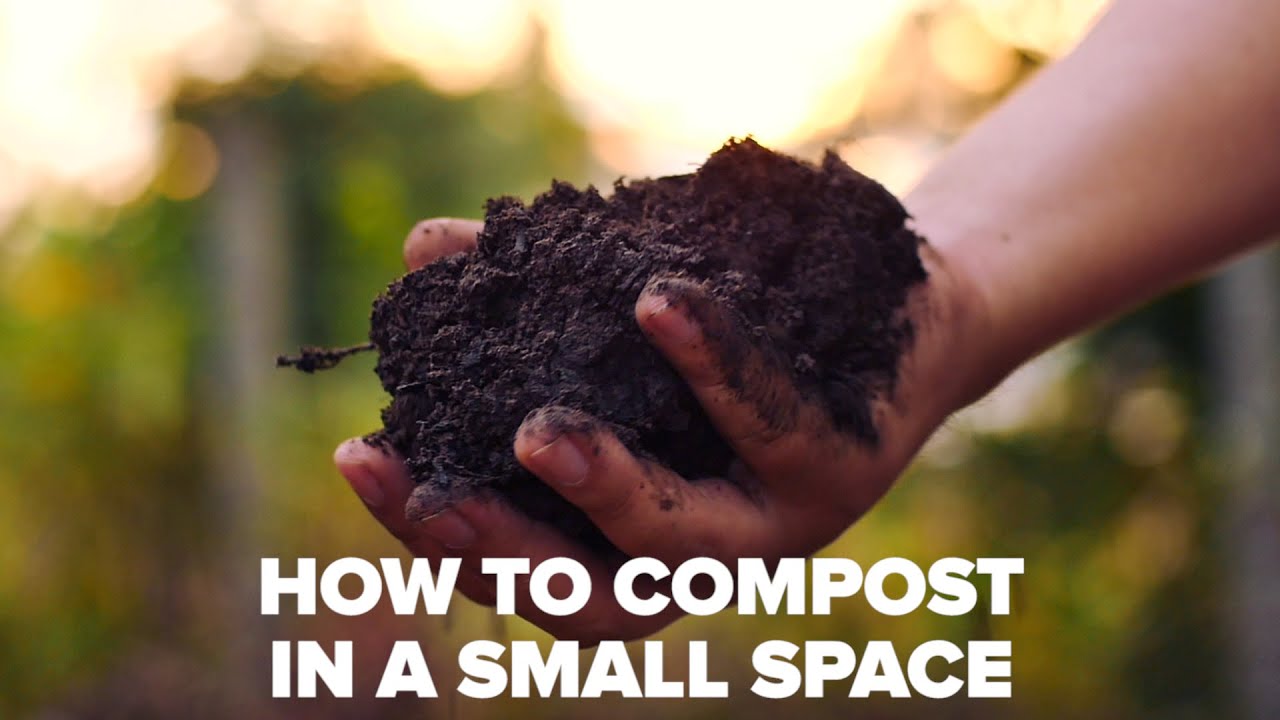
male hands in rich soil
john james wood/Getty Images
steak
pressdigital/Getty Images
cheese dinner
milax/Getty Images
raccoon with young ones running on grass
john and janet foster/Getty Images
source